
Rules engine
Onboarding and compliance involve many decisions and actions beyond running checks. Someone has to chase a customer who forgot to upload an ID, assign a task to a colleague, or approve a case once every check is complete.
In real-life compliance work, these actions fall to different people:
- a customer-facing agent chases the customer who forgot to upload their ID
- a middle office manager assigns a task to a colleague
- a compliance officer approves a case when all the tasks of the verification process are complete
These actions can happen inside Ondorse, or be triggered from other tools such as a CRM.
The Ondorse rules engine makes them easy to automate, and easy to iterate on, adapt and expand as your policy changes.
How rules are written
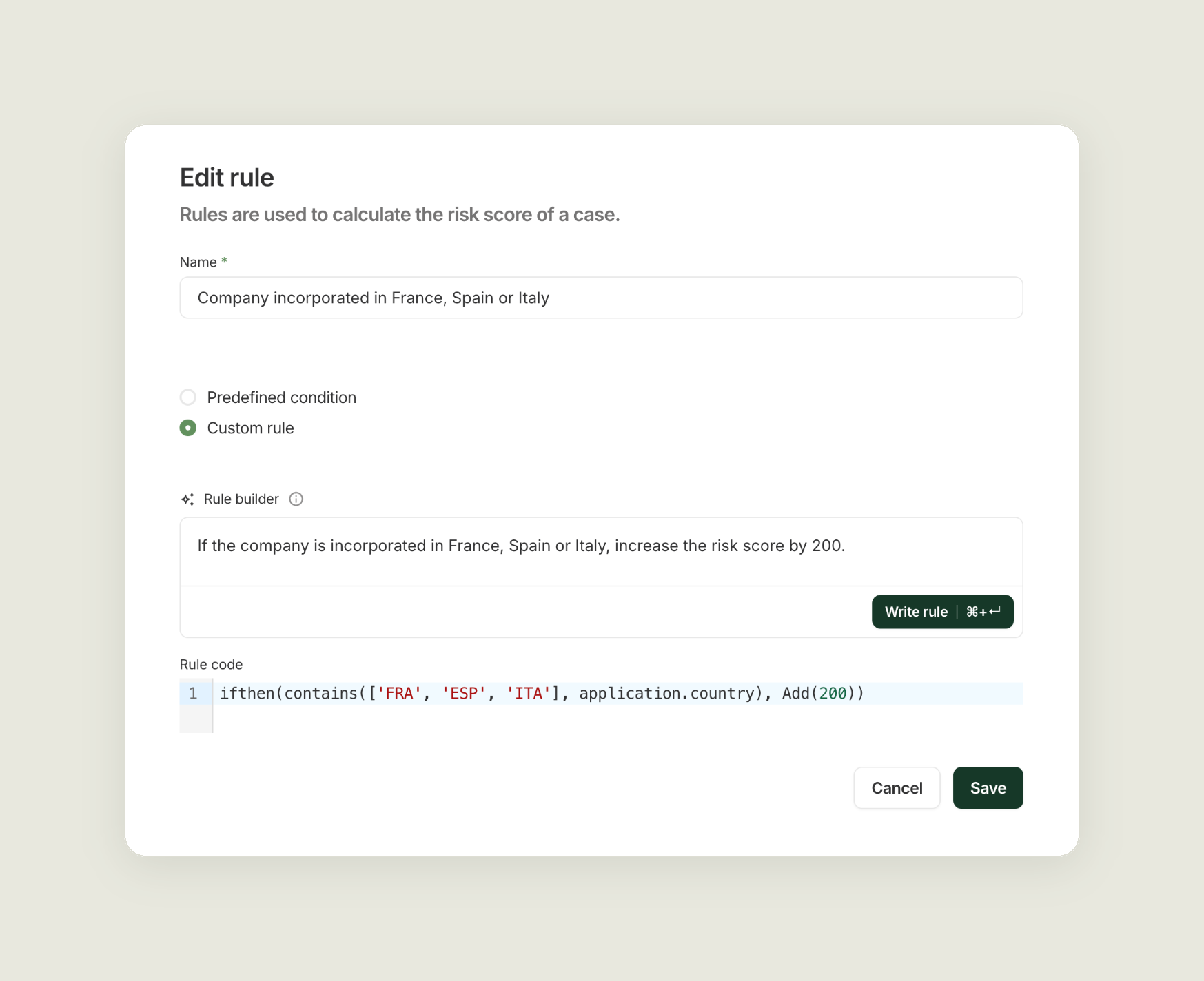
Rules are written in a simplified coding language, flexible enough to cover a wide range of use cases. For example, this rule adds 200 points to the risk score of any company incorporated in France, Spain or Italy:
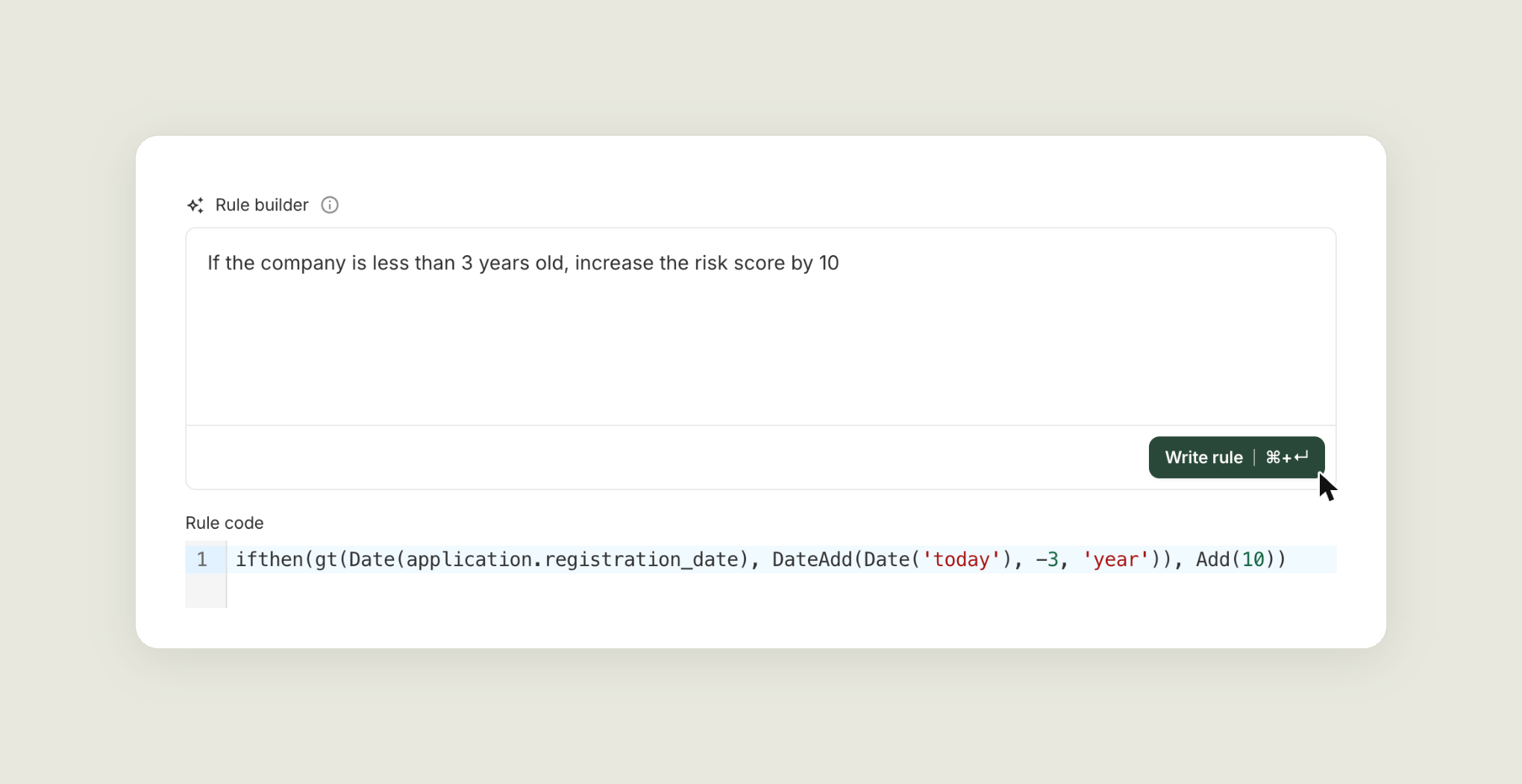
ifthen(contains(['FRA', 'ESP', 'ITA'], application.country), Add(200))Writing code can feel intimidating, and you don't have to. The AI-assisted rule builder translates a rule described in plain English into working code:
Where rules are used
The rules engine started as an internal development tool and is now used across several features of the Ondorse platform. You can write your own rules for risk scoring and automations.
Updated 10 days ago